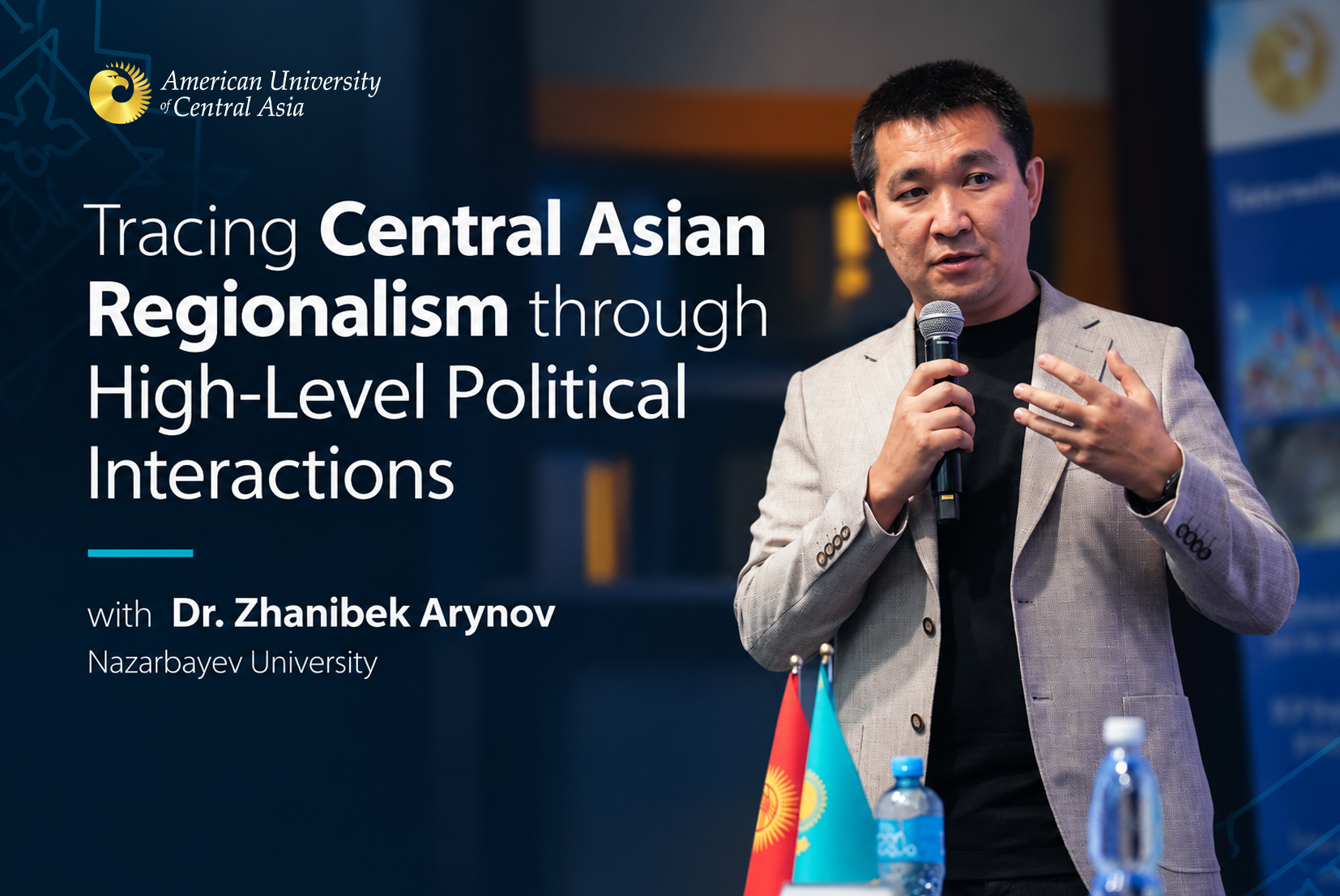
ICP Public Lecture Series: "Tracing Central Asian Regionalism through High-Level Political Interactions" by Dr. Zhanibek Arynov"
October 6, 2026
听
听
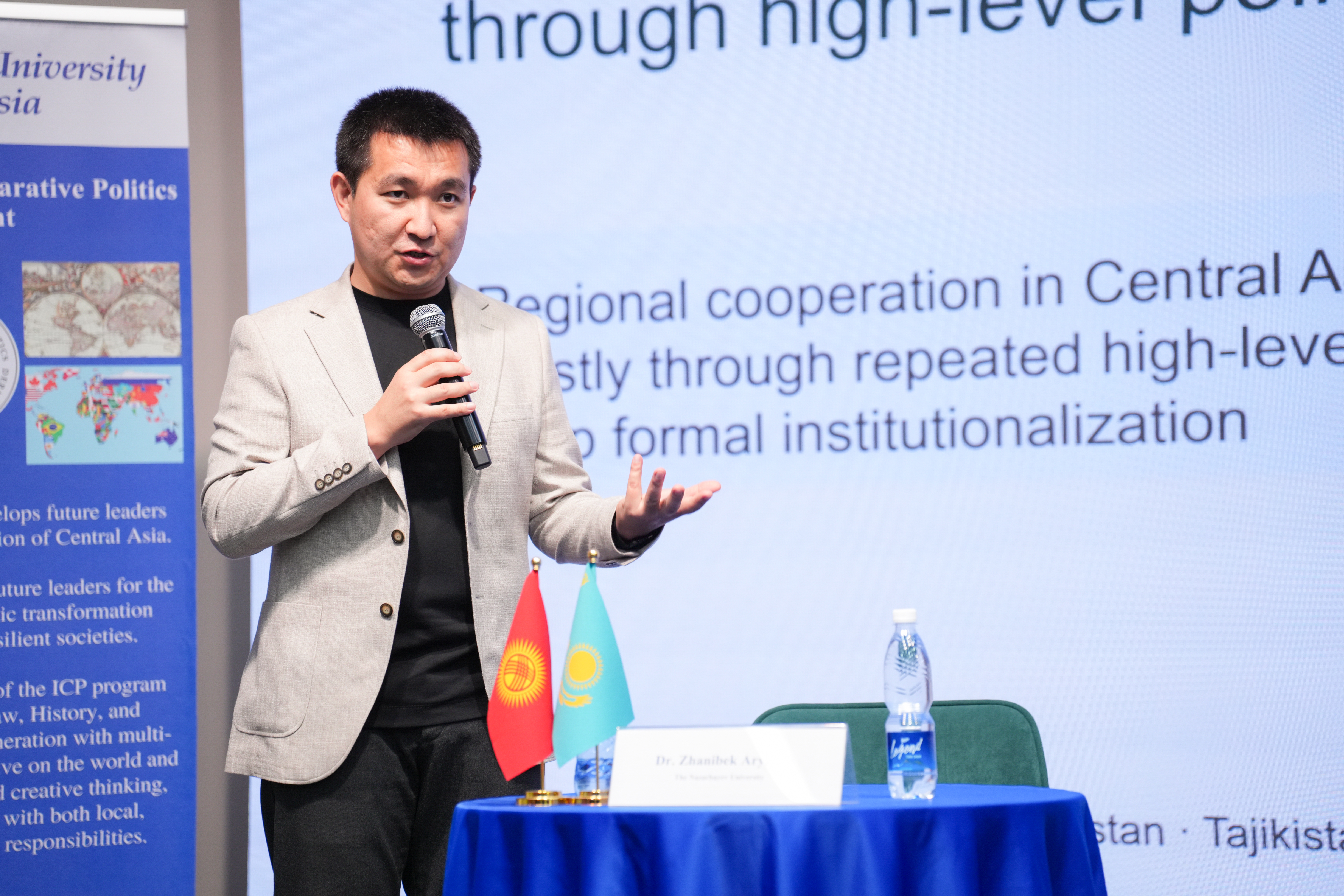
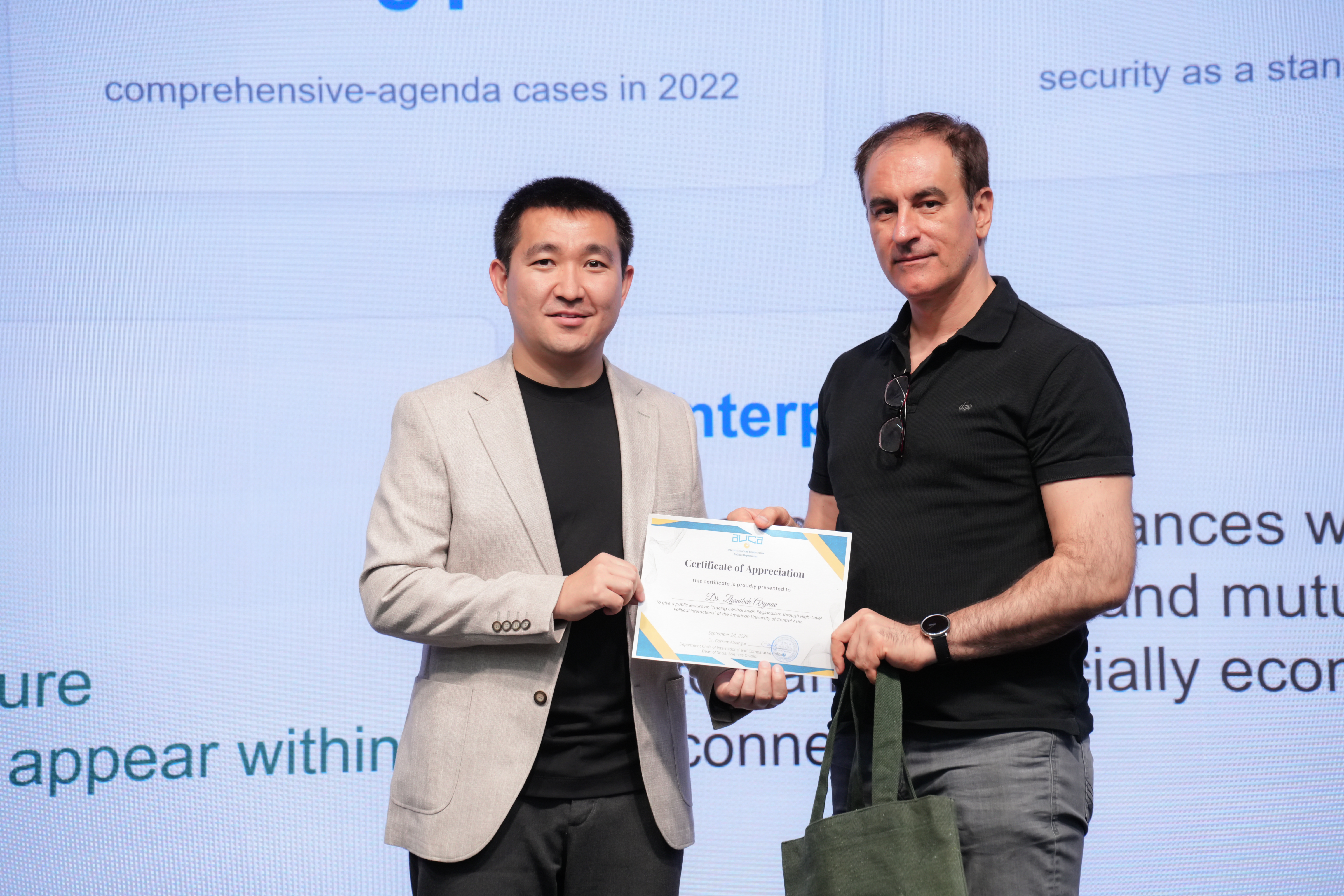
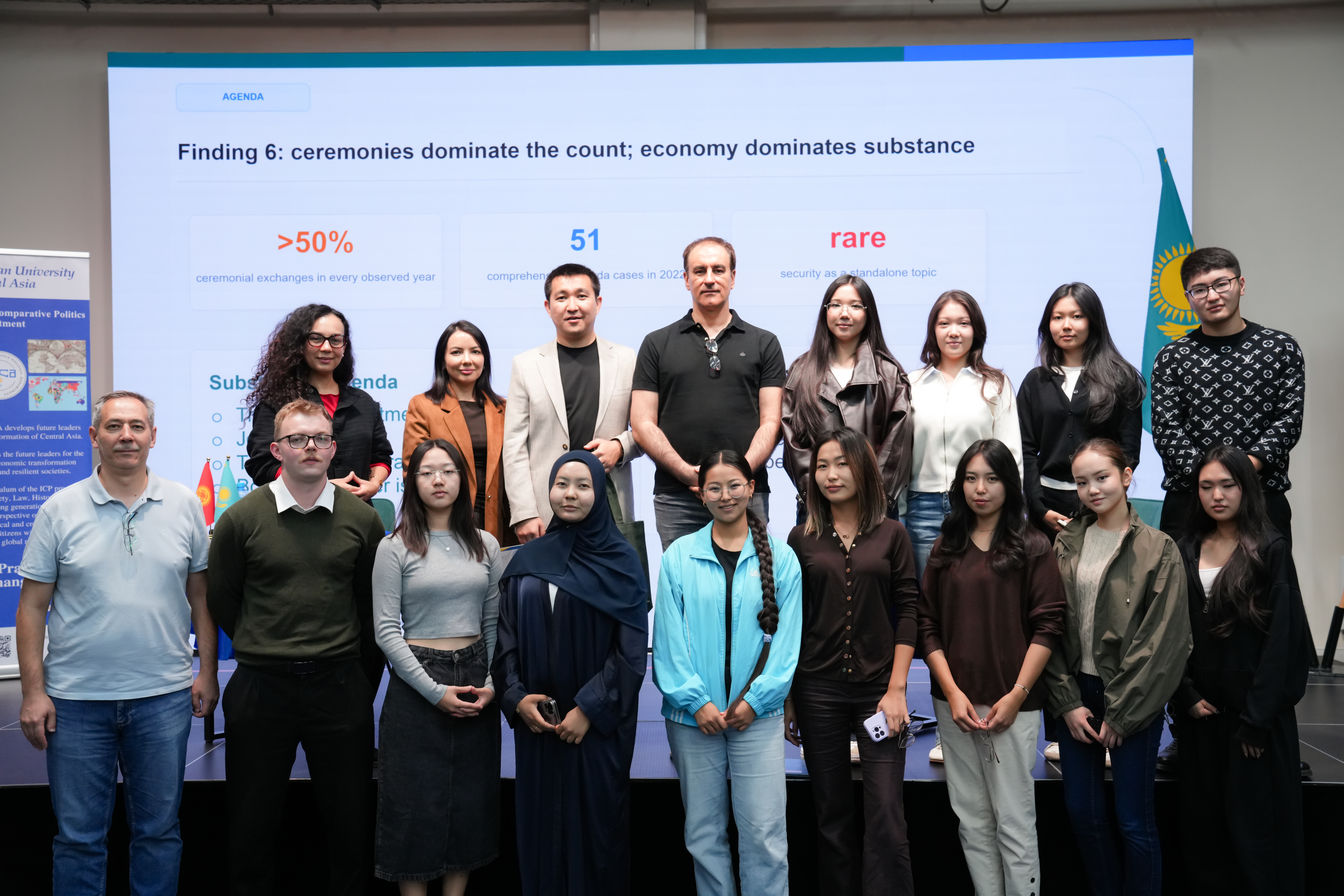
On September 24, 2026, the 红唇直播 hosted Dr. Zhanibek Arynov, Assistant Professor at Nazarbayev University, for a presentation titled 鈥淭racing Central Asian Regionalism through High-Level Political Interactions.鈥�
The presentation explored how regional cooperation among Kazakhstan, Kyrgyzstan, Tajikistan, Turkmenistan, and Uzbekistan has evolved since the mid-2010s. Drawing on a draft manuscript by Arynov, Nuriddenova, and Umirbekov, Dr. Arynov examined a central puzzle in contemporary Central Asian politics: although the region continues to have relatively limited formal institutional integration, interaction and cooperation among its political leaders have become significantly more frequent.
Rather than assessing regionalism only through formal organizations, supranational institutions, or the delegation of authority, the research focuses on actual patterns of political interaction. It asks how high-level intra-regional contacts have developed since 2015, which political actors are driving these exchanges, and which diplomatic formats and policy areas dominate regional cooperation.
The research describes the emerging model as 鈥渓ight regionalism鈥� 鈥� a form of cooperation characterized by relatively low levels of formalization but increasingly regular political interaction, personal diplomacy, bilateral trust-building, and shared diplomatic practices. According to the study, regional cooperation does not necessarily begin with strong institutions; it can also develop gradually through repeated interaction and the building of trust among states.
听
The study is based on a dataset of high-level political interactions involving presidents, prime ministers, and foreign ministers from the five Central Asian states. It covers selected years between 2015 and 2024 and examines bilateral and multilateral meetings, phone and video calls, telegrams, the actors involved, participating countries, and the issues discussed.
听
One of the most significant findings is the sharp increase in high-level regional contacts. The number of recorded interactions rose from 60 in 2015 to 151 in 2024, reaching a peak of 158 interactions in 2023. This growth suggests that regional diplomacy has become increasingly routine and visible over the past decade.
听
The research also shows that Central Asian regional cooperation remains strongly president-driven. Presidents account for the largest share of interactions in every year included in the dataset. While prime ministers and foreign ministers have become more active, particularly since 2015, presidential diplomacy remains central to the regional model. This makes interpersonal trust between leaders an important resource for cooperation, while at the same time making the system potentially dependent on individual political relationships
The research also challenges the idea that Central Asian cooperation is driven by a single dominant country. Kazakhstan, Uzbekistan, and Kyrgyzstan represent the most consistently active group across the dataset, while Tajikistan became increasingly active in 2023 and 2024. Turkmenistan also recorded growing levels of interaction, despite maintaining a cautious approach toward deeper institutionalization. These patterns suggest that regionalization in Central Asia is distributed among several states rather than being led by a single regional hegemon.
In terms of substance, ceremonial exchanges account for more than half of recorded interactions in each observed year. However, when substantive issues are discussed, economic cooperation features prominently. Trade and investment, joint ventures, transport, and infrastructure are among the major themes, while border and water issues often appear as part of broader agendas. Security, by contrast, rarely appears as a standalone topic.
The findings contribute to a broader discussion about how regionalism should be understood. Rather than equating regional integration exclusively with formal institutions, the research suggests that repeated meetings, telephone conversations, diplomatic rituals, and bilateral exchanges can form an important regional infrastructure of their own.
At the same time, the presentation acknowledged important limitations and open questions. The dataset focuses only on high-level official diplomacy and does not capture all layers of regional cooperation. It also excludes many interactions occurring through organizations and formats such as the CIS, EAEU, CSTO, SCO, and C5+1, unless they involve direct intra-Central Asian meetings.
The research, therefore, raises important questions about the future of Central Asian regionalism: Can a system based heavily on personal diplomacy survive changes in political leadership? Will 鈥渓ight regionalism鈥� eventually lead to greater institutionalization, or will it remain a distinctive and relatively flexible form of cooperation?
Dr. Arynov鈥檚 presentation offered a perspective on Central Asia that goes beyond conventional measures of regional integration, emphasizing that the absence of strong formal institutions does not necessarily mean the absence of meaningful regionalism.